
Incense Making Village Hue: Discover the Traditional Craft of Thuy Xuan
If you are looking for a meaningful cultural experience beyond Hue’s imperial monuments, Thuy Xuan is a place worth discovering. Known for its colorful bundles of incense and the gentle fragrance of agarwood and herbs, this traditional craft village offers a glimpse into a part of everyday Hue that has been passed from one generation to the next.
Located about 7 kilometers southwest of central Hue, Thuy Xuan lies near Vong Canh Hill and the Tomb of Emperor Tu Duc. Today, the village is both a working craft community and a popular cultural destination for travelers who want to see traditional incense making, meet local artisans, and experience a quieter side of the former imperial capital.
In this guide, we explore the history, craft, atmosphere, and travel experience of the incense making village Hue, including what you can see, how incense is produced, and how to make your visit more meaningful.
1. A Glimpse into the History of Thuy Xuan
Thuy Xuan has a long association with incense making, with sources describing a tradition that has continued for hundreds of years. The craft became closely connected with Hue during the Nguyen Dynasty, when incense was made for the royal court, officials, temples, and households in the wider Thuận Hóa–Phú Xuân region.
Incense was not simply a product to sell. It has an important place in Vietnamese spiritual and family traditions, particularly in ancestor worship, temples, pagodas, and ceremonial occasions. For families in Thuy Xuan, making incense became a skill and livelihood passed down through generations.
The Hue government officially recognized Thuy Xuan incense making as a traditional craft in 2021, highlighting the importance of preserving the village’s traditional knowledge and cultural identity.
Walking through the incense making village Hue today, you can still see local families producing incense while welcoming visitors. Modern tools have been introduced to some parts of the process, but traditional knowledge remains an important part of the craft.

2. Why Is the Incense Making Village Hue So Famous?
The first thing many visitors notice is color.
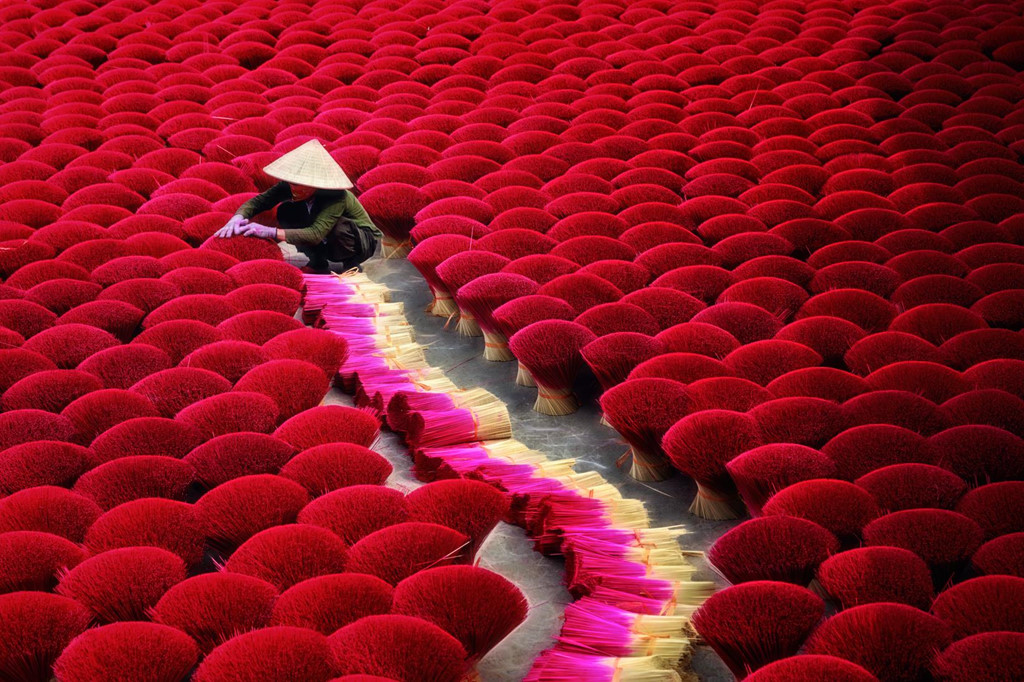
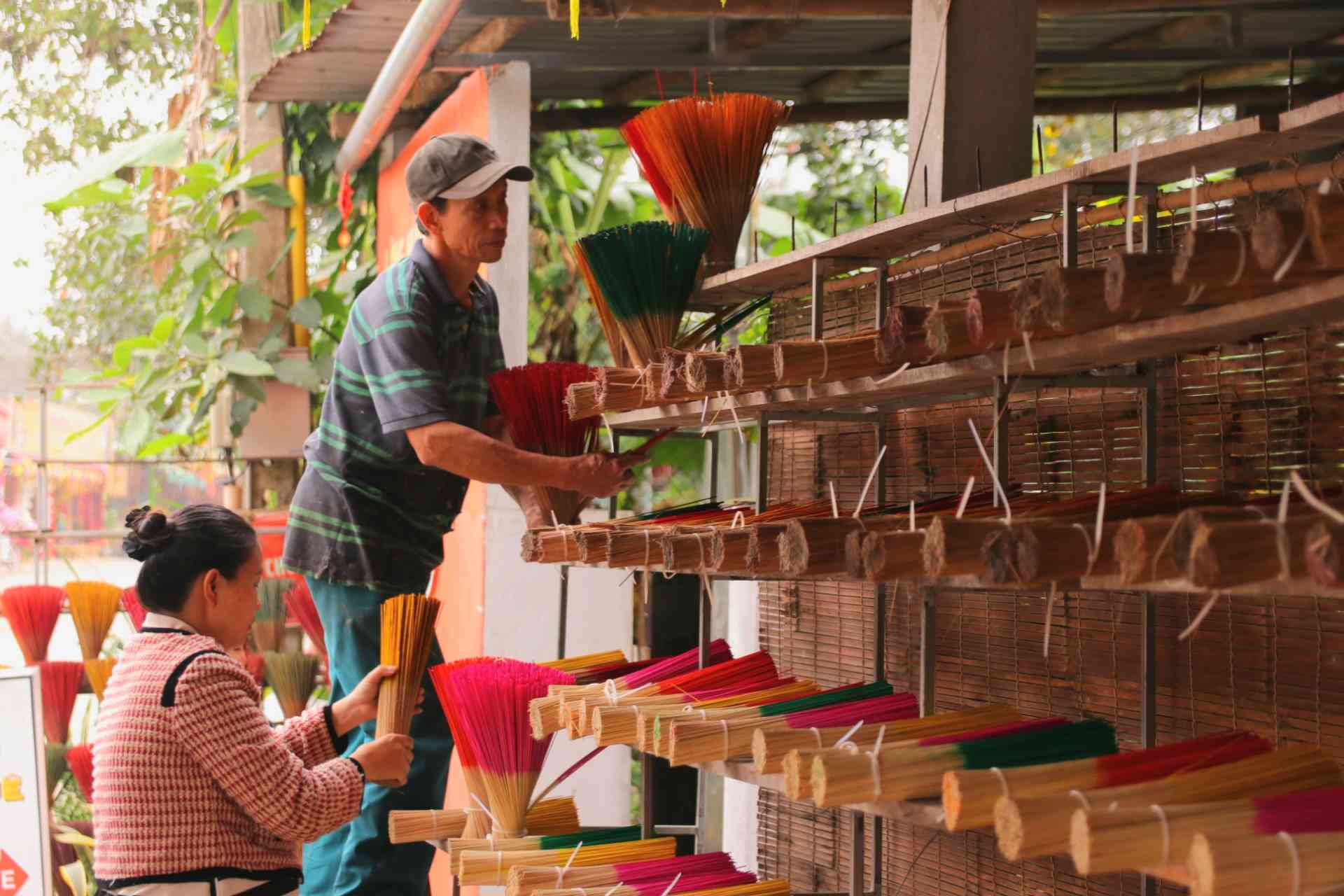
Bundles of incense sticks are arranged in large fan-shaped groups and displayed outside workshops. Red, yellow, green, purple, and other shades create the appearance of giant flowers along the roadside.
These colorful displays have become one of the most recognizable images of Hue’s traditional craft villages. However, the beauty of Thuy Xuan is not only visual. The air is often filled with the warm, earthy fragrance of incense ingredients, creating an atmosphere very different from the busy streets of central Hue.
The incense making village Hue is particularly associated with agarwood incense, although local workshops produce different varieties and scents, including cinnamon, lemongrass, and herbal blends.
For photographers, the colorful bundles make an attractive backdrop. For culture lovers, however, the more interesting part is understanding how these beautiful displays are made and why incense remains meaningful to local families.
3. How Is Incense Made in Thuy Xuan?
Traditional incense making requires patience, consistency, and knowledge of ingredients.
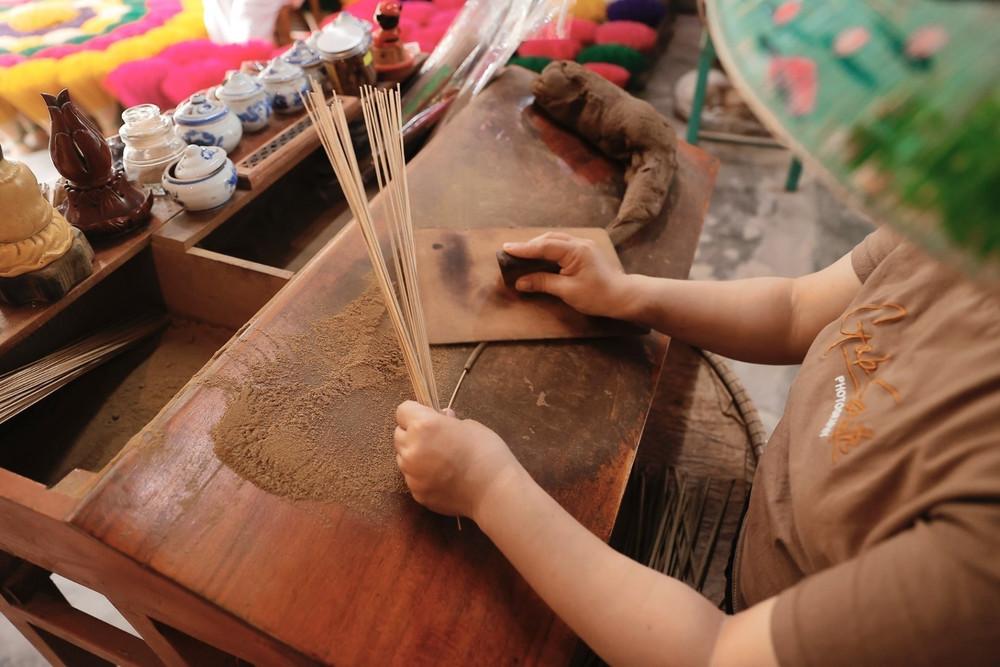
The exact formulas vary between producers, but natural aromatic materials are processed into fine powders. Depending on the type of incense, ingredients can include agarwood, cinnamon, cloves, star anise, cardamom, pine buds, and other herbs.
The ingredients are carefully prepared and mixed with water and natural binding materials to create an incense paste. The mixture needs the right consistency so it can adhere to the bamboo core and dry evenly.
The bamboo sticks are another important part of the process. They are prepared and dried before the incense mixture is applied. While machinery is now used for some stages, traditional techniques are still preserved by local families.
The incense paste is then rolled or applied around the sticks. Skilled makers need to create an even layer. The finished sticks are arranged outdoors to dry in the sunlight.
This is when visitors often see the famous “bouquets” spreading across the village.
A visit to the incense making village Hue gives you the chance to see that the beautiful final product is the result of many small and careful steps.
4. Meet the People Behind the Craft
One of the most valuable parts of visiting Thuy Xuan is meeting the people who keep the craft alive.
For many families, incense making is more than a business. It represents family knowledge, memories, and a connection with previous generations. The techniques may evolve, but the understanding of ingredients, proportions, shaping, and drying continues to be shared within families and the wider community.
Tourism has created another opportunity for artisans. Some workshops now open their doors to visitors, explain the process, demonstrate traditional techniques, and allow travelers to experience parts of the craft themselves.
This interaction can make a visit much more personal. Instead of simply photographing colorful incense sticks, you begin to understand the people and work behind them.
5. What Can You Experience at the Incense Making Village Hue?
There are several simple ways to enjoy your time in Thuy Xuan.
5.1. Watch the Incense-Making Process
Take time to observe how the raw ingredients are prepared, mixed, shaped, and dried. Ask questions about the different scents and techniques used by the local family or artisan.

5.2. Try Making Incense
Depending on the workshop and the day, visitors may be able to try simple parts of the incense-making process.
This hands-on activity can be surprisingly enjoyable. It shows how much patience and skill are involved in creating an incense stick that may look simple at first glance.
5.3. Photograph the Colorful Displays
The rows of incense are one of the most photogenic features of the village. The colorful bundles can look like flowers spreading across the roadside, especially when they are arranged outside to dry.
Morning or late afternoon can be pleasant times for photography because the light is softer and temperatures are generally more comfortable.
Remember that these displays are part of someone’s workplace and livelihood. Ask before entering a working area or taking close-up photographs of artisans.
5.4. Shop for Local Incense
Visitors can find different types of incense and related handmade products at local workshops.
If you enjoy a particular fragrance, ask the seller about its ingredients before choosing what to take home. Buying directly from local makers is also a simple way to support families who continue to preserve the traditional craft.

6. When Is the Best Time to Visit?
The experience at an incense making village in Hue can change depending on the weather and production schedule.
On dry and sunny days, you are more likely to see large quantities of incense arranged outside for drying. This is when the village is at its most colorful and visually impressive.
Early morning and late afternoon are generally comfortable times to explore outdoor areas, particularly during Hue’s hotter months. The softer light can also create beautiful conditions for photography.
During rainy periods, some production may take place indoors and outdoor displays may be smaller. However, the village can still be interesting because you may have more opportunities to focus on the craft itself and speak with local makers.

7. How to Get to the Incense Making Village Hue
The incense making village Hue is located on Huyen Tran Cong Chua Street, roughly 7 kilometers southwest of central Hue. It is close to Vong Canh Hill and the Tomb of Emperor Tu Duc, making it easy to combine with other cultural and historical attractions.
You can reach the village by taxi, motorbike, bicycle, or as part of a local tour.
Cycling or traveling by motorbike can be a pleasant option if you want to see more of the surrounding neighborhoods and countryside along the way.
For first-time visitors, a local guide can add useful context by explaining the history of the craft, introducing local families, and helping you understand details that you might otherwise miss.
8. What to Know Before You Visit
Thuy Xuan is a living craft village in Hue, not a museum created only for tourists. People work there, make products, serve customers, and carry out their daily routines as part of everyday village life.
A respectful visit to the incense making village Hue means giving artisans space to work, asking before touching materials, and requesting permission before taking close-up photographs.
It is also worth remembering that the colorful displays are only one part of the story. The real value of the village lies in the knowledge, labor, craftsmanship, and family traditions behind each bundle of incense.
When you slow down and listen, visiting the incense making village Hue becomes much more than a photo stop. It becomes an opportunity to appreciate the people, skills, and traditions that keep this local craft alive.
9. Combine the Incense Making Village Hue with Other Experiences
The village is located in an area where several cultural and historical experiences can be combined into one day.
You could visit the Tomb of Emperor Tu Duc, continue to Vong Canh Hill, and then explore Thuy Xuan before heading back toward central Hue.
You can also combine a visit to the incense making village Hue with other local experiences such as countryside cycling, traditional crafts, local food, or a cooking class.
This combination reflects what makes Hue special: the city is not only about monuments. Its culture continues through food, villages, family traditions, crafts, and everyday life.
10. Why Visit the Incense Making Village Hue?
A visit to Thuy Xuan offers something different from a standard sightseeing itinerary. Rather than simply visiting another attraction and taking a few photographs, travelers can step into a real working community and discover a traditional craft that remains part of everyday life in Hue.
The incense making village Hue gives visitors the opportunity to see traditional craftsmanship in its real working environment. You can watch local artisans prepare incense, learn about the different stages of production, meet the people behind the craft, and gain a deeper understanding of how an everyday spiritual product is connected to the cultural identity of Hue.
What makes the incense making village Hue especially interesting is the chance to experience the craft through the people who continue to practice it. Behind the colorful displays are years of knowledge, patience, skill, and family traditions. For many local makers, incense production is not simply something prepared for visitors but an important part of their work and community life.
The village also shows how traditional communities can adapt to modern tourism while continuing their original craft. Today, artisans in the incense making village Hue produce incense for local and wider markets while welcoming travelers who are curious about their work. Tourism can provide an opportunity for visitors to discover the craft while also helping traditional skills remain visible and valued.
For travelers looking for more meaningful things to do in Hue, the experience goes beyond colorful photographs. Visiting the incense making village Hue allows you to connect craft, community, and culture in a more personal way. You can take time to observe the process, talk with local makers when appropriate, and appreciate the work behind something that may seem simple at first.
This connection between craft, community, and culture is what makes Thuy Xuan special. It is a place where traditional knowledge continues to be practiced, local people continue their daily work, and visitors can discover another side of Hue beyond its famous historical landmarks.
11. Experience the Traditional Side of Hue
Hue is often remembered for its Imperial City, royal tombs, pagodas, and historic architecture. These places are essential to understanding the city’s past, but they are only part of the Hue story.
To discover the city more deeply, spend time with local people and explore traditions that are still part of everyday life.
The incense making village Hue is one of those places where history is not behind glass or inside a museum. It lives in the hands of artisans, in the fragrance of natural ingredients, and in the colorful bundles drying under the sun.
At Hue Local Experiences, we believe travel becomes more meaningful when you connect with local people, traditional crafts, food, and everyday life. A visit to Thuy Xuan can be combined with a variety of authentic experiences around Hue, allowing you to see different sides of the city.
Join a Hue Cooking Class to discover local ingredients and learn how to prepare traditional Hue dishes. Explore the peaceful countryside on a La Chu Village Tour, where you can visit local markets, meet farming families, harvest fresh ingredients, and enjoy a meal prepared in a traditional home.
For travelers who want to discover Hue’s food culture, our Hue Food Tours take you beyond familiar tourist restaurants to explore local flavors and everyday eating traditions. You can also experience the city’s landscapes and hidden corners on a Hue Sunset Tour, visit traditional craft communities, or explore the countryside by bicycle or motorbike.
Each experience offers a different way to connect with Hue – through its food, people, crafts, countryside, and stories.
Whether you are walking through the incense making village Hue, cooking with a local family, cycling through green rice fields, or sharing a meal in the countryside, the goal is the same: to experience Hue not simply as a visitor, but through the people who call it home.
Take your time, follow the fragrance, meet the makers, taste the local food, and discover the living traditions of Hue one experience at a time.
Recent Posts

How to Get Thien Mu Pagoda: Complete Hue Travel Guide

Discover the Timeless Beauty of Thien Mu Pagoda