Thien Mu Pagoda Hue Vietnam: 7 Amazing Things to Discover
Thien Mu Pagoda Hue Vietnam is one of the most recognizable landmarks in Hue and an important symbol of the city’s spiritual, cultural and historical identity. Located on Ha Khe Hill overlooking the Perfume River, this centuries-old pagoda combines beautiful Buddhist architecture with one of the most peaceful landscapes in central Vietnam.
For travellers exploring Hue, a visit to Thien Mu Pagoda Hue Vietnam offers a different experience from the Imperial City and royal tombs. Instead of grand palaces and elaborate royal architecture, you will find ancient trees, temple courtyards, Buddhist structures, traditional bells and peaceful views over the river.
The pagoda is also closely connected to the history of Hue. Established in the early 17th century, it has witnessed major changes throughout the development of the city and remains one of its most important religious sites today.
Whether you are interested in Vietnamese history, photography, architecture, Buddhism or simply looking for a peaceful place to escape the busy streets, Thien Mu Pagoda Hue Vietnam deserves a place on your itinerary.

1. Why Visit Thien Mu Pagoda Hue Vietnam?
There are many temples and pagodas across Vietnam, but Thien Mu Pagoda Hue Vietnam has a special character because of its combination of history, architecture and natural surroundings.
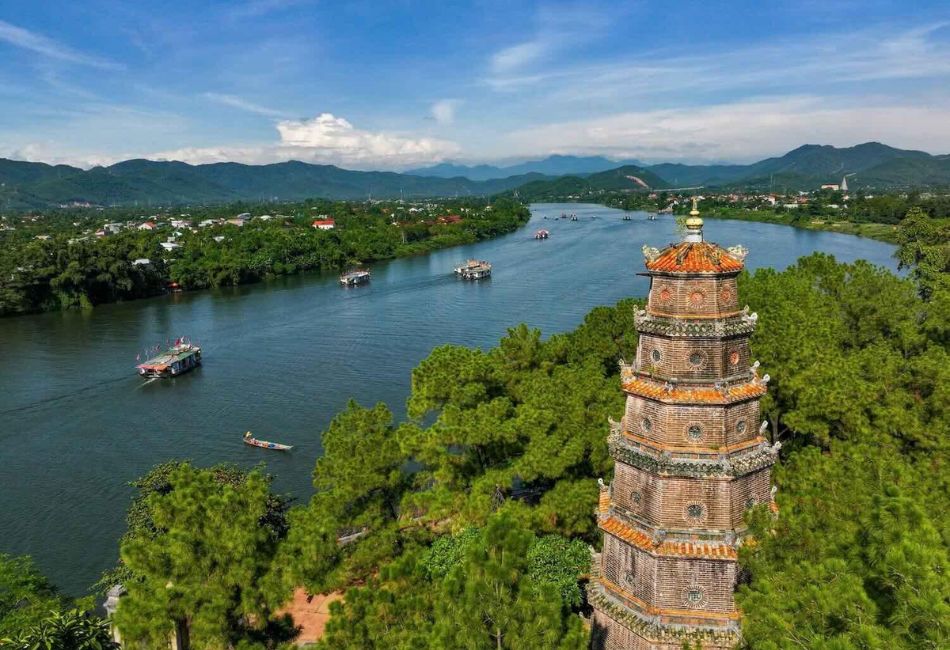
The pagoda sits beside the Perfume River, one of the defining natural features of Hue. From Ha Khe Hill, visitors can look across the river toward the green landscape surrounding the former imperial capital.
The peaceful setting makes the pagoda feel completely different from the busy streets of central Hue.
Another reason to visit is its historical importance. The pagoda dates back to 1601, making it one of the oldest and most significant religious sites in Hue.
Its famous Phuoc Duyen Tower, traditional temple buildings and large gardens have become iconic images of the city.
For many visitors, however, the most memorable part is simply the atmosphere.
Walk slowly through the grounds, listen to the temple bells, look at the old trees and take a moment to enjoy the view of the Perfume River.
That peaceful experience is what makes Thien Mu Pagoda Hue Vietnam more than just another sightseeing stop.
2. History of Thien Mu Pagoda
The history of Thien Mu Pagoda Hue Vietnam is closely connected with the early development of Hue as an important political and cultural centre.
The pagoda was established in 1601 under Nguyen Hoang, one of the early Nguyen lords who played an important role in the development of the region.
Over the following centuries, the pagoda was rebuilt, expanded and renovated by different rulers.
Its architecture today therefore represents several different periods of Hue’s history.
The pagoda later became an important religious landmark during the Nguyen Dynasty, when Hue was established as Vietnam’s imperial capital.

2.1. The Legend Behind the Name
One of the most interesting stories surrounding the pagoda is the legend of the Celestial Lady.
According to local tradition, an elderly woman appeared on Ha Khe Hill wearing red and blue clothing. She told local people that a lord would come to the area and build a pagoda on the hill.
After hearing this story, Nguyen Hoang ordered the construction of a temple at the location.
The woman became known as Thien Mu, meaning “Celestial Lady”, and the pagoda eventually took her name.
Whether viewed as a historical story or local legend, this tale has become an important part of the cultural identity of Thien Mu Pagoda Hue Vietnam.
2.2. Thien Mu Pagoda and Hue’s Imperial History
The pagoda developed alongside Hue’s rise as an imperial city.
During the Nguyen Dynasty, the area around the Perfume River became an important landscape for royal buildings, temples, tombs and religious sites.
Unlike the Imperial Citadel, which represented political power, Thien Mu Pagoda Hue Vietnam represents a more spiritual side of the city.
Its position above the river also reflects the traditional relationship between architecture and nature that can be seen throughout Hue.

3. What to See at Thien Mu Pagoda Hue Vietnam
A visit to Thien Mu Pagoda Hue Vietnam is not only about seeing the famous tower.
Take time to explore the entire complex and notice the smaller details that make the site special.
3.1. Phuoc Duyen Tower
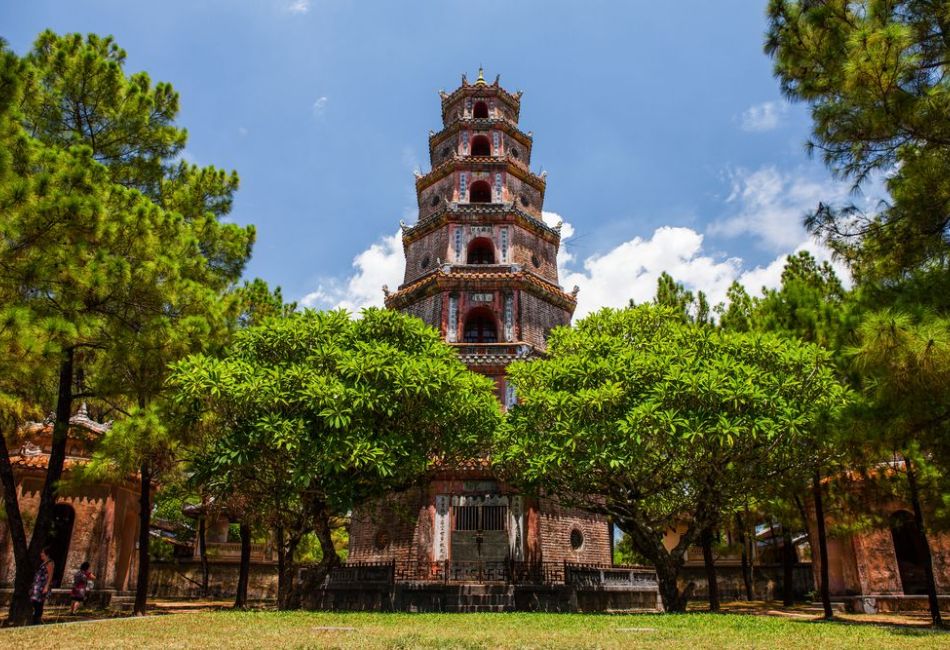
The first landmark most visitors notice is Phuoc Duyen Tower.
The seven-storey tower was built in 1844 during the reign of Emperor Thieu Tri. It has become one of the most recognizable symbols of Hue.
The tower stands prominently above the surrounding trees and can be seen from the Perfume River.
Its elegant proportions and traditional design make it especially photogenic.
3.2. Temple Architecture & Gardens
Beyond the tower, visitors can explore traditional temple buildings, Buddhist statues, stone inscriptions and peaceful garden areas.
Large trees provide shade throughout the complex, creating a calm environment even on warm days.
Pay attention to the traditional tiled roofs and decorative details.
The architecture is relatively restrained compared with the elaborate decoration found inside some royal tombs, which gives the pagoda a more peaceful character.
3.3. The Great Bell
The large bronze bell is another important feature of the pagoda.
Temple bells have a deep cultural and spiritual significance in Vietnamese Buddhism. Their sound is traditionally associated with prayer, reflection and the rhythm of temple life.
If you hear the bell during your visit, take a moment to listen.
The sound becomes particularly atmospheric in the quiet surroundings of the pagoda and the nearby river.
3.4. The Austin Car
One of the most unexpected historical objects at Thien Mu Pagoda Hue Vietnam is the old Austin Westminster automobile preserved at the site.
The vehicle is associated with Buddhist monk Thich Quang Duc and the events of 1963.
The car was used to transport him from Hue toward Saigon, where he later carried out a highly significant protest.
Its presence provides a connection between the peaceful pagoda and one of the most dramatic periods of modern Vietnamese history.
4. The Perfume River & Thien Mu Pagoda
The relationship between the pagoda and the Perfume River is one of the most beautiful aspects of the site.
From the hill, the river stretches through the landscape, surrounded by trees and countryside.
The combination of water, greenery and traditional architecture creates a scene that has become closely associated with Hue.
4.1. Dragon Boat Experience
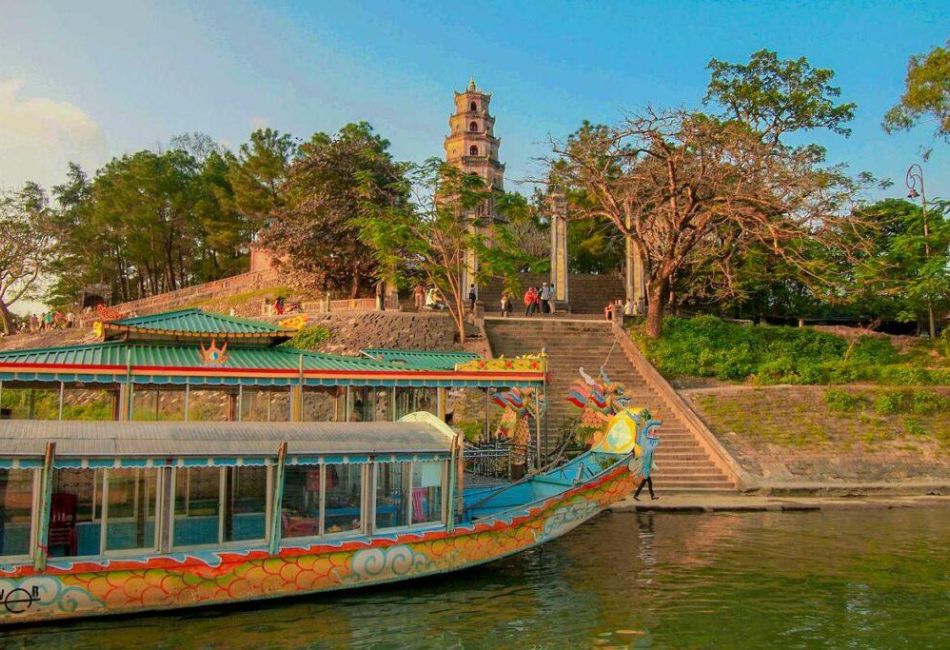
One of the most enjoyable ways to visit Thien Mu Pagoda Hue Vietnam is by taking a traditional dragon boat along the Perfume River.
Instead of arriving directly by road, you can enjoy a slower journey on the water.
As the boat moves along the river, you gradually approach Ha Khe Hill and see Phuoc Duyen Tower rising above the trees.
This makes the arrival part of the experience rather than simply a means of transportation.
4.2. Scenic Views & Photography
The pagoda is an excellent location for photography.
Try photographing Phuoc Duyen Tower from different angles rather than taking only the classic front-facing shot.
The river provides a natural background, while the trees and traditional buildings add depth to the composition.
Late afternoon is particularly beautiful when the light becomes softer.
For a memorable travel photograph, combine the tower, river and surrounding greenery in a single frame.
5. Best Time to Visit Thien Mu Pagoda Hue Vietnam
Choosing the right time can make your experience much more enjoyable.
5.1. Early Morning
Early morning is ideal for travellers who prefer a quiet atmosphere.
The weather is generally cooler, the light is softer and there are often fewer visitors.
It is also a good time for photography because the morning light creates gentle shadows around the temple buildings.
5.2. Late Afternoon & Sunset
Late afternoon is another excellent option.
The sunlight becomes warmer, creating beautiful conditions for photographs of the pagoda and Perfume River.
If you are visiting as part of a Hue sunset tour, you can combine the pagoda with other scenic locations around the city.
Watching the landscape slowly change as the sun goes down can be one of the most relaxing moments of your trip.
5.3. Weather Tips
Hue has a tropical climate with hot periods, rainy months and occasional storms.
During hot weather, bring water, sunscreen and comfortable clothing.
If rain is expected, carrying a small umbrella or lightweight rain jacket is useful.
The gardens provide some shade, but comfortable shoes are still recommended because you will be walking around the complex.

6. How to Get to Thien Mu Pagoda
Thien Mu Pagoda Hue Vietnam is located only a short distance from central Hue, so it is easy to include in a day of sightseeing.
6.1. By Car or Taxi
A private car or taxi is one of the easiest options, especially for families or travellers visiting several attractions in one day.
6.2. By Motorbike
Travelling by motorbike gives you more flexibility.
You can follow the roads along the Perfume River and stop at viewpoints, local cafés or other attractions along the way.
It is a good choice for travellers who enjoy independent exploration.
6.3. By Bicycle
Cycling is another enjoyable way to experience the area.
The journey allows you to see quieter streets, gardens and local homes that you might miss when travelling by car.
For travellers who enjoy slow travel, cycling to the pagoda can be part of the experience itself.
6.4. By Dragon Boat
For a more traditional Hue experience, choose a dragon boat.
The boat journey offers a completely different perspective of the city and allows you to approach the pagoda from the river.
This is particularly attractive for first-time visitors who want to combine sightseeing with a cultural experience.
7. Thien Mu Pagoda & Hue UNESCO Heritage
Thien Mu Pagoda Hue Vietnam is part of the Complex of Hue Monuments, which was recognized by UNESCO as a World Heritage Site in 1993.
The complex includes many of the most important historical landmarks associated with Hue’s imperial period, including the Imperial City and royal tombs.
The pagoda is therefore part of a much larger historical landscape.
Visiting it together with the Imperial Citadel and royal tombs gives travellers a better understanding of how religion, politics, architecture and nature were connected in the former imperial capital.
For history lovers, this makes the pagoda an essential stop when exploring Hue.
8. How to Include Thien Mu Pagoda in Your Hue Itinerary
There are several ways to include Thien Mu Pagoda Hue Vietnam in your travel plans.
For a classic heritage day, you can combine:
Dragon Boat → Thien Mu Pagoda → Imperial Citadel → Lunch → Minh Mang Tomb → Khai Dinh Tomb
This itinerary allows you to experience the major highlights of Hue’s imperial heritage in one day.
If you have more time, consider combining the historical centre with a countryside experience.
After visiting the pagoda and other heritage sites, head toward La Chu Village to discover another side of Hue.
You can explore local markets, cycle through village roads, visit Madam Thu Farm, harvest vegetables and join a traditional cooking class.
For travellers who want a longer experience, our Hue Tour 2 Days: Historical Sites and Rural Life Experience combines royal heritage with authentic countryside activities.
For travelers looking to experience a different side of Hue, the Hue Sunset Tour: Hidden Nature, Scenic Views & Thien Mu Pagoda offers a relaxing afternoon journey beyond the city’s historic landmarks. Explore hidden natural spots, enjoy panoramic views from Vong Canh Hill, discover the unique atmosphere of Thuy Tien Water Park, and end the day watching the sunset over the Perfume River at Thien Mu Pagoda.
This experience offers a different perspective of Hue—not only as a former imperial capital, but also as a peaceful city surrounded by lush landscapes, scenic viewpoints and tranquil riverside destinations.
9. Is Thien Mu Pagoda Worth Visiting?
Absolutely, Thien Mu Pagoda Hue Vietnam is worth visiting even if you are not particularly interested in religious architecture.
Its appeal comes from the combination of several things:
- Centuries of history
- Traditional Vietnamese architecture
- Buddhist culture
- The iconic Phuoc Duyen Tower
- Beautiful Perfume River views
- Peaceful gardens
- Connections to modern Vietnamese history
More importantly, the pagoda gives you a chance to slow down.
After spending hours exploring royal palaces and tombs, sitting beneath the trees at the pagoda and watching boats move along the river can be a refreshing change of pace.
It is this combination of history, nature and tranquillity that makes the site so memorable.
10. Conclusion
Thien Mu Pagoda Hue Vietnam is much more than a famous photograph of a seven-storey tower.
It is a place where Hue’s religious traditions, imperial history and natural landscape come together.
From the legendary story of the Celestial Lady and the construction of the pagoda in 1601 to the iconic Phuoc Duyen Tower and its connection with the Perfume River, every part of the site tells a story.
Take your time when you visit.
Walk through the gardens, admire the architecture, listen to the temple bell and look across the Perfume River.
If possible, arrive by dragon boat or visit in the late afternoon when the light becomes softer.
And don’t forget to look beyond the famous tower.
The quieter details – the old trees, temple courtyards, historical objects and river views – are often what make the experience unforgettable.
For anyone exploring Vietnam’s former imperial capital, Thien Mu Pagoda Hue Vietnam is a place where you can pause, breathe and experience the peaceful side of Hue.
Recent Posts
How to Get Thien Mu Pagoda: Complete Hue Travel Guide
Incense Making Village Hue: Discover the Traditional Craft of Thuy Xuan