
Tu Duc Tomb in Hue: Complete Visitor Guide, History & Architecture
Step beyond the grand palace walls of the ancient imperial citadel into a quiet valley of pine trees and lotus-filled waters, where Vietnam’s poet-emperor built a timeless sanctuary for his soul.
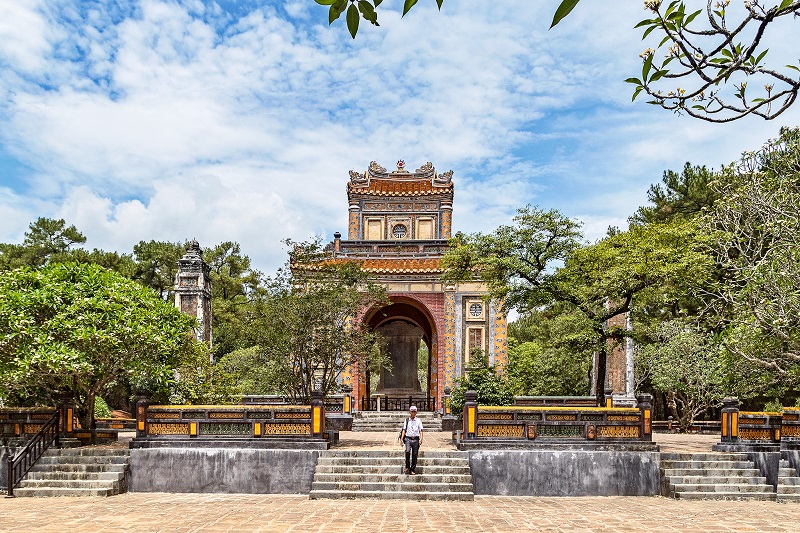
Nestled in a peaceful valley of frangipani trees and pine-covered hills in Thuy Xuan Ward, Tu Duc Tomb is one of Hue’s most poetic royal mausoleums. Built for the longest-reigning emperor of the Nguyen Dynasty, the complex is known as Khiêm Lăng (Tomb of Modesty) and served as both a royal retreat and final resting place. With its mossy stone paths, lotus ponds, and elegant traditional architecture, the tomb offers a glimpse into the emperor’s life and the history of nineteenth-century Vietnam. In this guide from Hue Local Experiences, discover its history, architecture, ticket prices, opening hours, and practical tips for visiting Tu Duc Tomb in Hue.
Tu Duc Tomb in Hue: Complete Visitor Guide, History & Architecture
Show table of content
- 1. Who Was Emperor Tu Duc? The Poet-King Behind the Mausoleum
- 1.1. The Reign of Emperor Tu Duc (1847 to 1883)
- 1.2. The Meaning Behind Khiem Lang (The Tomb of Modesty)
- 2. Architectural Layout and Highlights of Tu Duc Tomb
- 2.1. Vu Khiem Gate and the Living Palace Grounds
- 2.2. Luu Khiem Lake, Xung Khiem Pavilion, and Tinh Khiem Island
- 2.3. Hoa Khiem Palace and Minh Khiem Royal Theater
- 2.4. The Honor Courtyard, Stone Mandarins, and Khiem Cung Ky Stele
- 2.5. Buu Thanh Sepulcher and the Mystery of the Emperor’s True Grave
- 3. Practical Visitor Information: Location, Tickets, and Opening Hours
- 3.1. Where Is Tu Duc Tomb Located?
- 3.2. Opening Hours and Entrance Ticket Prices
- 3.3. How to Get to Tu Duc Tomb from Hue City Center
- 4. Best Time to Visit Tu Duc Tomb and Sightseeing Tips
- 5. Suggested Itinerary: Combining Tu Duc Tomb with Nearby Attractions
- 6. Explore the Imperial Wonders of Hue with Hue Local Experiences
- 7. Frequently Asked Questions (FAQs) About Tu Duc Tomb
1. Who Was Emperor Tu Duc? The Poet-King Behind the Mausoleum
As part of the UNESCO-listed Complex of Hue Monuments, the royal tombs of Hue represent the zenith of classical Vietnamese imperial architecture. Among them, Tu Duc Tomb stands apart because it was personally designed and curated by the emperor as a living sanctuary rather than merely a posthumous burial site.
1.1. The Reign of Emperor Tu Duc (1847 to 1883)
Emperor Tu Duc (born Nguyen Phuc Hong Nham) ruled Vietnam from 1847 to 1883, making his 36-year reign the longest among all thirteen monarchs of the Nguyen Dynasty. Highly educated, introverted, and profoundly devoted to literature and Confucian philosophy, the emperor authored thousands of classical poems, essays, and historical commentaries. Yet his era was marked by deep personal tragedy and national upheaval. Infertility caused by childhood smallpox left him without an heir, while growing French military encroachment steadily eroded Vietnamese sovereignty. Seeking solace from political pressures and family disputes, Emperor Tu Duc began planning his hillside retreat in 1864, creating a harmonious refuge where he could write poetry, compose music, and commune with nature.
1.2. The Meaning Behind Khiem Lang (The Tomb of Modesty)
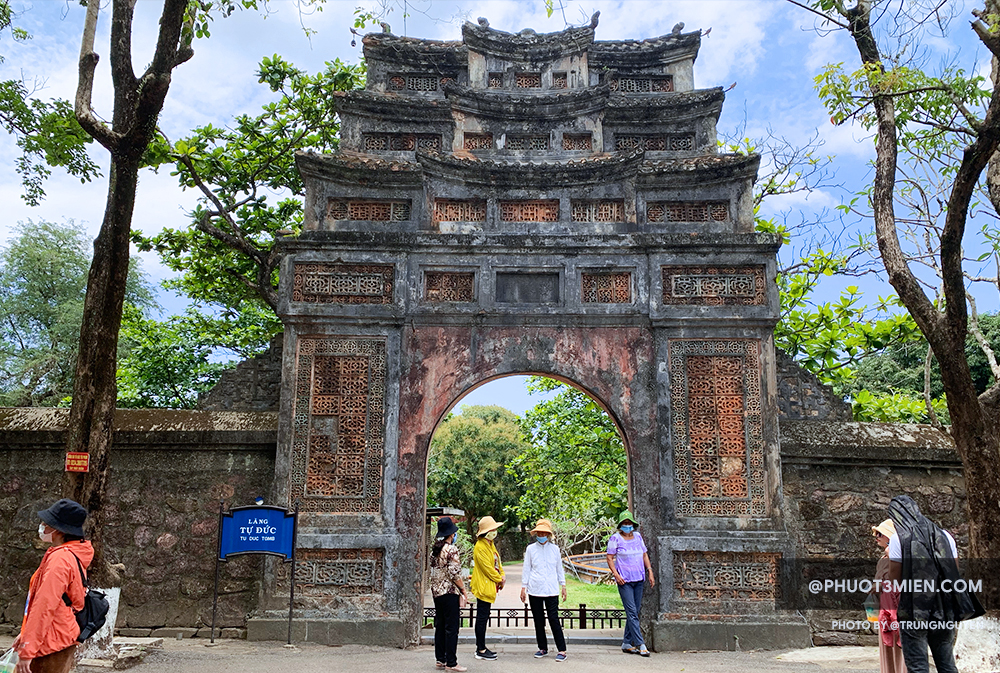
Originally named Van Nien Co (the Ten-Thousand-Year Villa), construction on the complex required immense physical labor and heavy taxes, sparking a brief rebellion in 1866 known as the Chay Voi Uprising. Shaken by the unrest, the remorseful emperor renamed the entire estate Khiem Cung (Modesty Palace), which later became known as Khiêm Lăng (the Tomb of Modesty). In an extraordinary gesture of humility, the word Khiem (meaning modesty or self-restraint) was incorporated into the names of nearly fifty buildings, pavilions, gates, lakes, and bridges across the 12-hectare estate.
2. Architectural Layout and Highlights of Tu Duc Tomb
Unlike the strict, linear axial alignment seen at other royal tombs, Tu Duc Tomb is divided into two distinct functional zones that blend organically into the natural contours of the hillside: the residential palace area (Dien) and the sacred burial sanctuary (Lang).
2.1. Vu Khiem Gate and the Living Palace Grounds
Entering through the graceful wooden portals of Vu Khiem Gate, visitors step onto winding brick footpaths shaded by frangipani blossoms and whispering pine boughs. Here, the layout deliberately avoids rigid geometric lines. Stone steps follow the natural slope of the hill, while low walls and open courtyards invite the surrounding forest into every view, establishing an immediate atmosphere of tranquility.
2.2. Luu Khiem Lake, Xung Khiem Pavilion, and Tinh Khiem Island
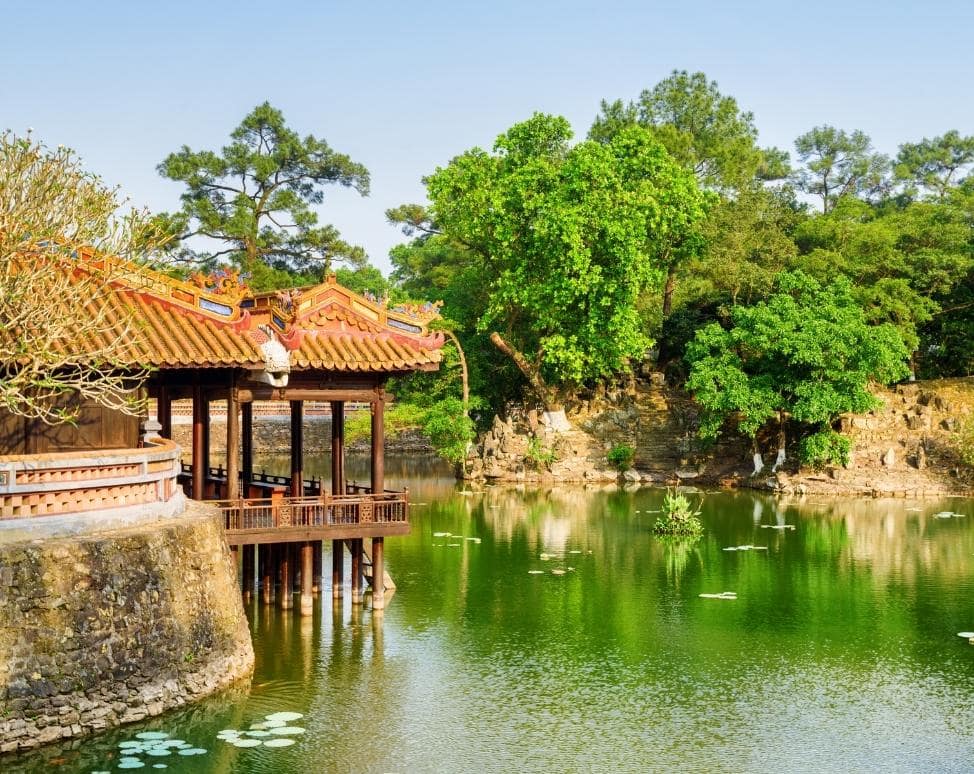
The visual heart of the palace precinct is Luu Khiem Lake, an artificial body of water created by damming a small hillside stream. Pink lotus flowers blanket the water during summer, while small islands dot the surface:
- Xung Khiem Pavilion: Built entirely over the water on sturdy wooden stilts, this elegant pavilion served as the emperor’s private literary retreat where he read poetry, admired the moon, and sipped lotus-scented tea gathered at dawn.
- Du Khiem Pavilion: Located along the lake edge, this shelter functioned as a royal boat landing where the imperial barge docked for fishing and boating excursions.
- Tinh Khiem Island: Across a curved wooden footbridge lies a small islet adorned with miniature rock gardens, where royal gardeners cultivated rare flora and released songbirds and small game.
2.3. Hoa Khiem Palace and Minh Khiem Royal Theater
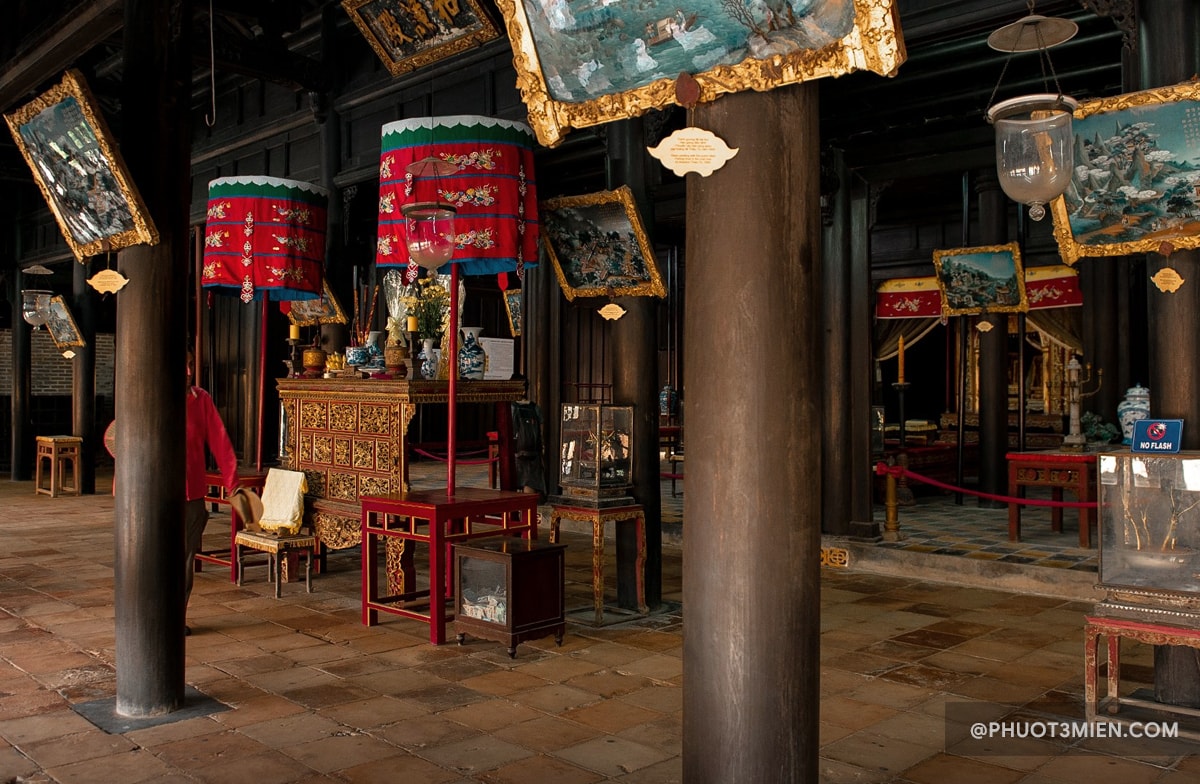
Ascending a flight of worn stone stairs brings you to Hoa Khiem Palace, the principal residential hall where Emperor Tu Duc worked and lived during his visits. Following his death in 1883, the hall was converted into a sacred worship chamber housing the ancestral altars of the emperor and Empress Le Thien Anh. Adjoining the palace is Minh Khiem Theater, recognized as one of the oldest preserved traditional royal theaters in Vietnam. Under its intricately carved and painted wooden ceiling, classical Vietnamese opera (Tuong) and imperial court dances were performed to entertain the royal court.
2.4. The Honor Courtyard, Stone Mandarins, and Khiem Cung Ky Stele
Crossing toward the northern necropolis, visitors enter the solemn Bai Dinh (Honor Courtyard). Two parallel rows of intricately carved stone figures, including civil mandarins, military officers, war elephants, and imperial horses, stand perpetually at attention. Uniquely, the stone mandarins here are noticeably shorter than those at other royal tombs, crafted deliberately below normal human height so as not to overshadow the diminutive stature of Emperor Tu Duc.
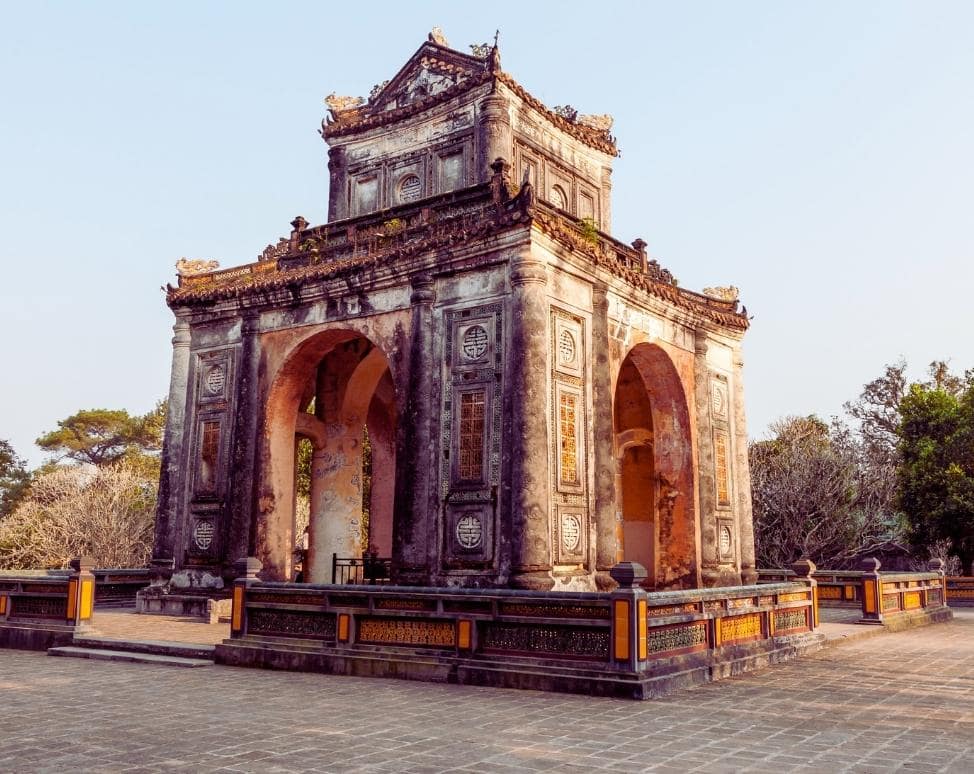
Beyond the courtyard sits a majestic pavilion sheltering the Khiem Cung Ky Stele, the heaviest stone stele in Vietnam, weighing over 20 tons. Transported from quarries more than 500 kilometers away in Thanh Hoa, the massive tablet bears 4,935 Chinese characters composed entirely by the emperor himself. Unlike typical royal steles written by succeeding heirs to praise a father’s deeds, Tu Duc‘s stele is a deeply honest autobiography in which he candidly confesses his physical frailties, his inability to father a successor, and his deep sorrow over losing national territory to French forces.
2.5. Buu Thanh Sepulcher and the Mystery of the Emperor’s True Grave
Past a crescent-shaped moat known as the Tieu Khiem Tri pond stands Buu Thanh, the walled circular stone sepulcher. Behind solid iron gates sits a simple stone tomb structure. However, according to historical accounts, the emperor’s actual physical remains were never interred inside this visible sepulcher. To protect the royal burial treasures from grave robbers and foreign troops, Emperor Tu Duc was buried in an undisclosed secret location in the hills surrounding Hue, and all 200 laborers who carried out the burial were reputedly executed to preserve the secret for eternity.
3. Practical Visitor Information: Location, Tickets, and Opening Hours
To ensure a seamless visit, keep these practical details in mind when planning your trip to Tu Duc Tomb.
3.1. Where Is Tu Duc Tomb Located?
- Address: Thuong Ba Hamlet, Thuy Xuan Ward, Hue City, Thua Thien Hue Province, Vietnam.
- Distance: Roughly 6 kilometers southwest of central Hue (approximately a 12- to 15-minute drive).
3.2. Opening Hours and Entrance Ticket Prices
- Opening Hours: 7:00 AM to 5:30 PM daily (including weekends and national holidays).
- Single Ticket Price: 150,000 VND per adult; 30,000 VND per child (ages 7 to 12); free for children under 6.
- Combo Ticket Option: If you plan to visit multiple imperial monuments, the Hue Monuments Conservation Centre offers multi-site combo tickets (covering the Imperial Citadel, Tu Duc Tomb, Mausoleum of Emperor Khai Dinh, and Minh Mang Tomb) that save up to 25% compared to purchasing individual entrance passes.
3.3. How to Get to Tu Duc Tomb from Hue City Center
Reaching Tu Duc Tomb is easy by several means of transport:
- By Private Car or Taxi: The most comfortable and hassle-free choice, especially on warm tropical afternoons. You can book a convenient Hue Car Rental service with an English-speaking driver to visit multiple royal tombs at your own pace.
- By Motorbike or Scooter: Ideal for independent travelers. Head south from the city center down Dien Bien Phu Street, turn onto Le Ngo Cat Street, and continue onto Doan Nhu Hai Street straight to the tomb gates.
- By Bicycle: A peaceful 30-minute ride through shaded suburban streets and traditional garden villages, suitable for active adventurers during the cooler morning hours.
4. Best Time to Visit Tu Duc Tomb and Sightseeing Tips
To experience the tranquil poetic atmosphere at its finest, consider these local sightseeing recommendations from Vietnam Tourism and local guides:
- Early Morning (7:30 AM to 9:30 AM): Arriving early allows you to enjoy cool temperatures, gentle morning light filtering through the pine canopy, and peaceful courtyards before larger tour groups arrive.
- Late Afternoon (3:30 PM to 5:00 PM): Golden hour casts warm reflections across Luu Khiem Lake, highlighting the weathered terracotta roof tiles and stone dragon balustrades.
- Summer Lotus Season (May to July): The lake bursts into bloom with fragrant pink lotuses, creating iconic photo opportunities around Xung Khiem Pavilion.
- Dress Code & Etiquette: Because Hoa Khiem Palace and the royal shrines remain active places of ancestral worship, visitors should dress respectfully with shoulders and knees covered. Remove hats and maintain quiet voices inside worship halls.
5. Suggested Itinerary: Combining Tu Duc Tomb with Nearby Attractions
Because Tu Duc Tomb is centrally positioned in the cultural corridor of Thuy Xuan Ward, you can easily combine it with other top attractions featured in our 15 Things to Do in Hue, Vietnam guide:
- Thuy Xuan Incense Making Village (3 minutes away): Stroll along vibrant bamboo drying racks and learn how local artisans roll fragrant agarwood and cinnamon incense at the Incense Making Village in Hue.
- Tu Hieu Pagoda (5 minutes away): Discover the deeply peaceful pine forest monastery where Zen Master Thich Nhat Hanh lived his final years and where Nguyen Dynasty royal eunuchs are laid to rest.
- Vong Canh Hill (8 minutes away): Take in panoramic vistas overlooking a tranquil sweeping bend of the Perfume River, especially picturesque at sunset.
- Khai Dinh Tomb (10 minutes away): Contrast the poetic classical woodwork of Tu Duc Tomb with the dramatic blackened-concrete facade and sparkling mosaic artistry at the Mausoleum of Emperor Khai Dinh.
- Thien Mu Pagoda: Complete your cultural day trip along the riverbank by visiting the iconic seven-story tower following our comprehensive guide to Thien Mu Pagoda opening hours and travel tips.
6. Explore the Imperial Wonders of Hue with Hue Local Experiences
Hue’s royal heritage is rich, layered, and best understood through the stories of the people who shaped it. To unlock the deepest insights into the imperial city’s history, architecture, and living folklore, explore with our team at Hue Local Experiences.
- All-Inclusive Heritage Tours: Experience the Imperial Citadel, ancient pagodas, and imperial tombs with passionate native storytellers on our signature Hue Experience All Tour.
- Cultural Immersion: Learn about traditional customs, folk arts, and court traditions through our dedicated insights on Hue Culture, Traditions, and Local Life.
- Flexible Travel Services: Whether you need private door-to-door transport, curated walking tours, or custom countryside excursions, we ensure your journey across Central Vietnam is authentic, comfortable, and unforgettable.
7. Frequently Asked Questions (FAQs) About Tu Duc Tomb
How much time should I spend at Tu Duc Tomb?
Most visitors spend approximately 1.5 to 2 hours exploring Tu Duc Tomb. This allows plenty of time to walk the lakeside gardens, photograph Xung Khiem Pavilion, examine the imperial artifacts inside Hoa Khiem Palace, and read the inscriptions at the Khiem Cung Ky Stele.
Is Emperor Tu Duc actually buried at Tu Duc Tomb?
No. While the Buu Thanh sepulcher contains a stone sarcophagus, the emperor’s actual physical burial site was kept strictly secret to safeguard royal treasures from looters, and its precise location remains one of the great unsolved mysteries of Hue.
Why is Tu Duc Tomb considered one of the most beautiful in Hue?
Unlike other imperial tombs built purely as monumental mausoleums, Tu Duc Tomb was designed as a living summer retreat. Its harmonious integration of pavilions, lakes, pine forests, and lotus ponds reflects classical oriental feng shui and poetic sensibility, making it feel like a timeless royal garden.
Is Tu Duc Tomb accessible for elderly travelers or wheelchairs?
The main paths connecting Vu Khiem Gate and the edge of Luu Khiem Lake are relatively flat. However, reaching Hoa Khiem Palace and the Khiem Cung Ky Stele requires navigating several flights of stone stairs, which may present moderate challenges for wheelchair users or travelers with limited mobility.
Recent Posts



How to Get Thien Mu Pagoda: Complete Hue Travel Guide