Where to Eat in Hue: Complete Local Guide to Street Food, Heritage Restaurants & Imperial Dining
Follow the fragrant trail of simmering lemongrass broth, charcoal-grilled pork skewers, and delicate steamed rice cakes through the historic streets of Vietnam’s former imperial capital.
Deciding where to eat in Hue is one of the highlights of visiting Central Vietnam. Once the imperial capital of the Nguyen Dynasty, Hue developed a rich culinary heritage blending royal cuisine, local street food, and Buddhist vegetarian traditions. Today, the city offers an incredible variety of flavors, from spicy beef noodle soup and traditional savory cakes to authentic meals in historic garden houses. This guide from Hue Local Experiences will help you discover the best places to eat in Hue and experience the city’s unique food culture.
Where to Eat in Hue: Complete Local Guide to Street Food, Heritage Restaurants & Imperial Dining
Show table of content
- 1. Why Hue Is Celebrated as Vietnam’s Culinary Capital
- 1.1. The Harmony of Royal Court Artistry and Folk Street Flavors
- 1.2. Understanding Hue’s Dining Neighborhoods (North Bank vs. South Bank)
- 2. Where to Eat Iconic Hue Noodle Dishes & Morning Street Food
- 2.1. Best Places for Authentic Bun Bo Hue (Hue Beef Noodle Soup)
- 2.2. Where to Eat Com Hen and Bun Hen (Baby Clam Rice and Noodles)
- 3. Where to Eat Hue Savory Rice Cakes, Crispy Pancakes & Grilled Skewers
- 3.1. Best Spots for Banh Beo, Banh Nam, and Banh Loc
- 3.2. Famous Eateries for Banh Khoai and Nem Lui
- 4. Best Sit-Down Restaurants for Authentic Hue & Imperial Cuisine
- 4.1. Madam Thu Restaurant: Warm Hospitality and Signature Tasting Platters
- 4.2. Garden House Dining and Royal Banquet Restaurants
- 4.3. Best Vegetarian (Chay) Restaurants in Hue
- 5. Markets, Sweet Soups (Che Hue) & Iconic Salted Coffee
- 5.1. Dong Ba Market Food Court: A Daytime Grazing Paradise
- 5.2. Where to Try Che Hue (Sweet Soups) and Ca Phe Muoi (Salted Coffee)
- 6. Local Tips for Eating Like an Insider in Hue
- 7. Taste the Best of Hue with Hue Local Experiences
- 8. Frequently Asked Questions (FAQs) About Where to Eat in Hue
1. Why Hue Is Celebrated as Vietnam’s Culinary Capital
Just as the city’s palaces and royal mausoleums earned recognition as part of the UNESCO Complex of Hue Monuments, the culinary heritage of Hue is revered across Vietnam as a living art form. If you have ever wondered what Hue is famous for, locals will proudly tell you that food sits right alongside imperial history. For travelers searching for where to eat in Hue, the city’s rich food culture offers countless authentic flavors, from royal-inspired dishes to beloved street food. Discovering where to eat in Hue is also a wonderful way to experience the traditions and local identity that make Hue unique.
1.1. The Harmony of Royal Court Artistry and Folk Street Flavors
Unlike the large family-style platters common in southern Vietnam, dining in Hue emphasizes petite portions, intricate presentation, and a bold balance of spicy, salty, sour, and sweet notes. Influenced by Hue Royal Cuisine (Am Thuc Cung Dinh), even humble street dishes are prepared with remarkable care. A single meal often involves half a dozen small saucers, each paired with its own custom dipping sauce (nuoc cham or fermented peanut-sesame gravy) and a basket of crisp garden herbs, sour starfruit, and green fig slices.
1.2. Understanding Hue’s Dining Neighborhoods (North Bank vs. South Bank)
Before mapping out where to eat in Hue, it helps to understand how the Perfume River divides the city into two distinct culinary zones:
- The North Bank (Citadel & Old Town): Surrounding the Imperial Citadel, neighborhoods like Tay Loc, Phu Hau, Gia Hoi, and Kim Long preserve multi-generational family stalls, traditional garden houses, and historic markets such as Dong Ba Market.
- The South Bank (Modern Center & Walking Streets): Linked by Truong Tien Bridge and Phu Xuan Bridge, streets such as Vo Thi Sau Street, Pham Hong Thai Street, Nguyen Cong Tru Street, and Hung Vuong Street offer welcoming sit-down restaurants, bustling morning noodle shops, and lively evening dessert alleys within easy walking distance of most hotels.
2. Where to Eat Iconic Hue Noodle Dishes & Morning Street Food
Mornings in Hue begin early, with aromatic steam rising from giant aluminum stockpots along tree-lined sidewalks by 6:00 AM. If you want to eat like a true local, start your day with one of these two legendary bowls.
2.1. Best Places for Authentic Bun Bo Hue (Hue Beef Noodle Soup)
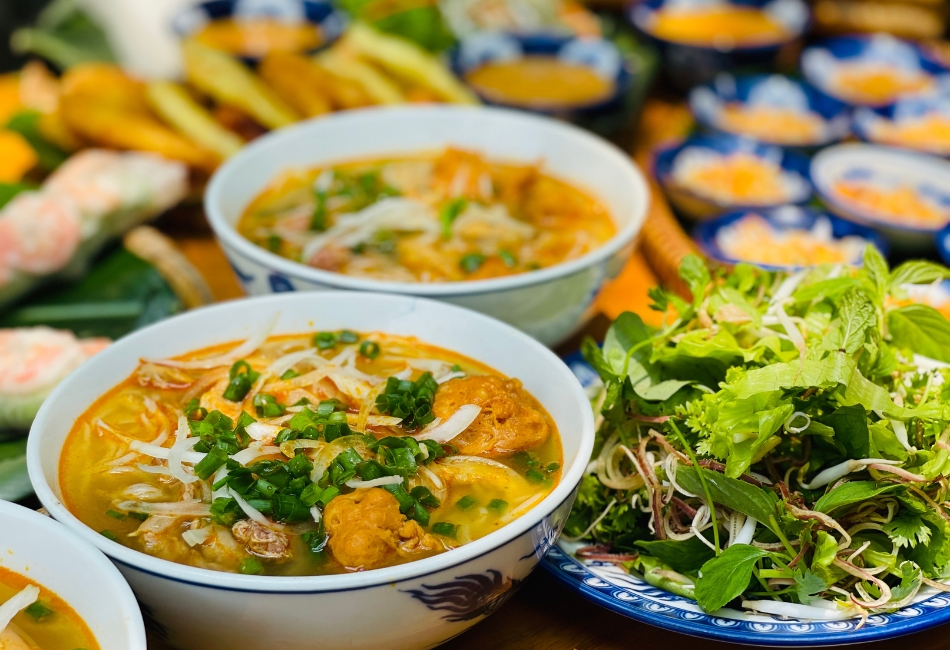
World-famous Bun Bo Hue tastes noticeably different in its hometown than anywhere else. If you’re wondering where to eat in Hue, trying an authentic bowl of Bun Bo Hue is a must. The broth is fragrant with lemongrass, enriched with fermented shrimp paste (ruoc Hue), and flavored with vibrant chili oil. Served with thin rice vermicelli, tender beef shank, pork knuckle, crab or pork balls (cha cua), and shredded banana blossom, it captures the distinctive flavors of Hue cuisine.
For anyone researching where to eat in Hue, these local favorites offer a great starting point. For a deeper dive, check out our guide to the best Bun Bo Hue in Hue. Here are some local favorites:
-
Bun Bo Hue Me Keo: Located at 20 Bach Dang Street (near Gia Hoi Bridge), this legendary morning stall has served rich, spicy lemongrass-pork broth for over seven decades. Arrive between 6:00 AM and 9:00 AM before the pots run dry (approximately 35,000–50,000 VND per bowl).
-
Bun Bo Ba Tuyet: Situated at 47 Nguyen Cong Tru Street, Ba Tuyet is popular with travelers staying in the hotel district, serving generous bowls with sweet bone broth, tender beef, and handmade crab sausage.
-
Bun Bo O Phung (Chu Vong): Found at 14 Nguyen Du Street, this beloved afternoon and evening spot opens around 3:00 PM.
-
Madam Thu Restaurant: Located at 45 Vo Thi Sau Street, this welcoming restaurant serves a beautifully balanced bowl of Bun Bo Hue throughout the day in a comfortable indoor setting.
Whether you prefer a traditional street-side breakfast or a relaxed restaurant meal, these recommendations will help you discover where to eat in Hue and enjoy one of Vietnam’s most iconic noodle dishes.
2.2. Where to Eat Com Hen and Bun Hen (Baby Clam Rice and Noodles)
If Bun Bo Hue is the bold king of local noodles, Com Hen (baby basket clam rice) is the soulful everyday dish of the people. Room-temperature cooked rice is topped with stir-fried river clams harvested from the Perfume River, crispy fried pork rinds, roasted peanuts, shredded taro stems, starfruit, fresh mint, chili paste, and a side bowl of piping-hot clam broth.
- Con Hen (Hen Islet in Vi Da Ward): Cross the small bridge onto Con Hen, an alluvial islet in the Perfume River where generations of families harvest and prepare fresh baby clams. Com Hen Hoa Dong (64 Kiet 7 Ung Binh Street) is the most famous family kitchen on the island, serving bowls for just 15,000 to 25,000 VND.
- Com Hen Han Mac Tu Street: Along the scenic canal of Han Mac Tu Street leading toward Vi Da, dozens of casual stalls serve Com Hen, Bun Hen (clam vermicelli), and Mi Hen from morning until late afternoon.
- Quan Nho (28 Pham Hong Thai Street): Located inside the courtyard of a hotel gate in central Hue, this spotless morning stall serves exceptional Com Hen between 6:00 AM and 10:30 AM without requiring a trip to the islet.
3. Where to Eat Hue Savory Rice Cakes, Crispy Pancakes & Grilled Skewers
As midday turns into afternoon, the culinary focus in Hue shifts toward delicate steamed rice dumplings and sizzling street-side grills. Sampling a platter of these savory snacks is an essential part of experiencing Hue culture and local life.
3.1. Best Spots for Banh Beo, Banh Nam, and Banh Loc
Known collectively as Banh Beo Nam Loc, these bite-sized rice and tapioca cakes showcase the refinement of local home cooking:
- Banh Beo: Steamed rice flour discs served in tiny porcelain saucers, topped with dried shrimp floss, crispy pork cracklings, and scallion oil.
- Banh Nam: Flat rectangular rice-flour cakes steamed inside fragrant banana leaves with minced shrimp and pork.
- Banh Bot Loc: Chewy, translucent tapioca dumplings stuffed with whole river shrimp and pork belly, available either wrapped in banana leaves (Banh Loc La) or unwrapped (Banh Loc Tran).
- Banh Ram It: Sticky rice dumplings perched atop a crunchy golden fried rice-cake base.
Where to eat them:
- Quan Ba Do: Located at 8 Nguyen Binh Khiem Street (Phu Cat Ward, east of the Imperial Citadel), Ba Do is an institution where trays of freshly steamed cakes arrive hot from the kitchen all day long.
- Hang Me (Vo Thi Sau Street & Chi Lang Street): Known as “Mother’s Stalls,” iconic shops like Hang Me at 12 Vo Thi Sau Street or Banh Beo Ba Cu at 107 Nguyen Hue Street specialize in afternoon platters from 2:00 PM to 8:00 PM.
- Street of Banh Beo around Cung An Dinh: Alleyways off Nguyen Hue Street and Phan Dinh Phung Street near An Dinh Palace host dozens of family-run afternoon cake stalls.
3.2. Famous Eateries for Banh Khoai and Nem Lui
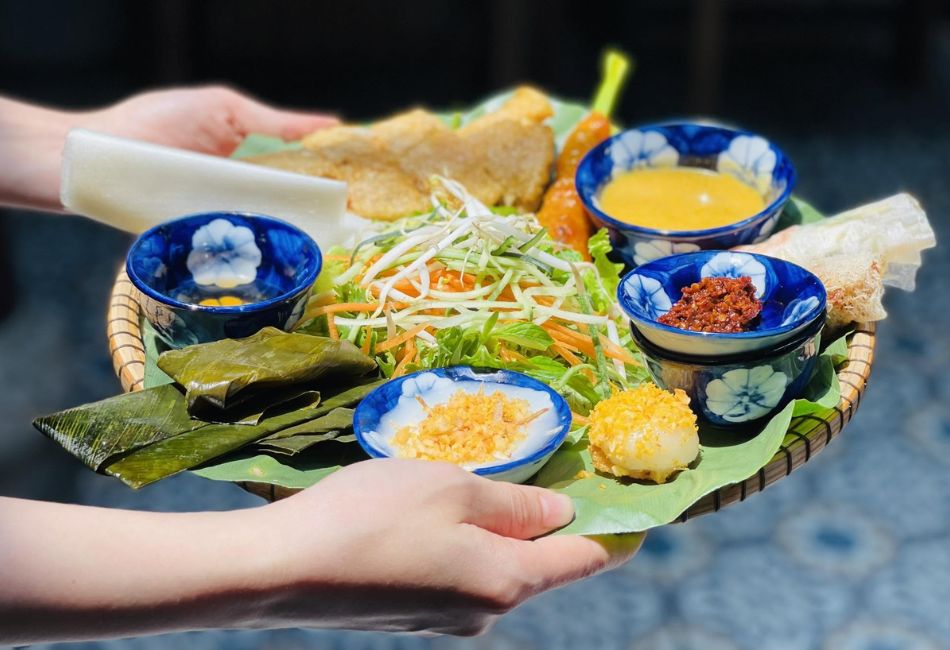
Two dishes that always appear side by side on Hue tables are Banh Khoai and Nem Lui. Smaller, thicker, and far crispier than southern Banh Xeo, Banh Khoai is pan-fried in cast-iron skillets with shrimp, pork, egg, and bean sprouts. Nem Lui consists of seasoned minced pork molded around fragrant lemongrass stalks and grilled over glowing charcoal. Both are wrapped in rice paper with fresh herbs, starfruit, and green banana, then dipped into nuoc leo, a thick, savory-sweet sauce simmered from crushed peanuts, toasted sesame seeds, pork liver, and fermented soybean.
- Hanh Restaurant: Located at 11 Pho Duc Chinh Street on the South Bank, Hanh Restaurant is a lively, bustling two-story eatery where first-time visitors can order a complete tasting combo of Banh Khoai, Nem Lui, Banh Beo, Banh Nam, and Banh Loc at very reasonable local prices.
- Banh Khoai Lac Thien: Situated at 6 Dinh Tien Hoang Street just outside Thuong Tu Gate of the Imperial Citadel, this historic family-run shop has been frying golden Banh Khoai over charcoal stoves for generations.
- Banh Khoai Hong Mai: Found at 110 Dinh Tien Hoang Street, another local favorite renowned for its rich peanut dipping sauce and smoky charcoal-grilled Nem Lui.
4. Best Sit-Down Restaurants for Authentic Hue & Imperial Cuisine
When you want to relax in a charming atmosphere with English menus, attentive service, and beautifully plated dishes, Hue offers outstanding sit-down restaurants ranging from cozy heritage dining rooms to lush garden estates.
4.1. Madam Thu Restaurant: Warm Hospitality and Signature Tasting Platters
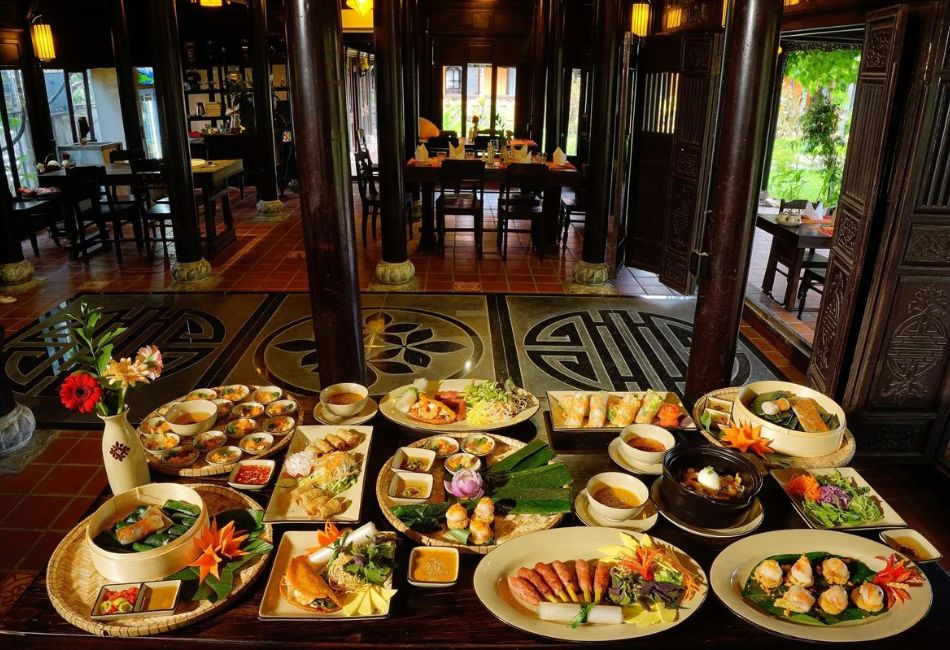
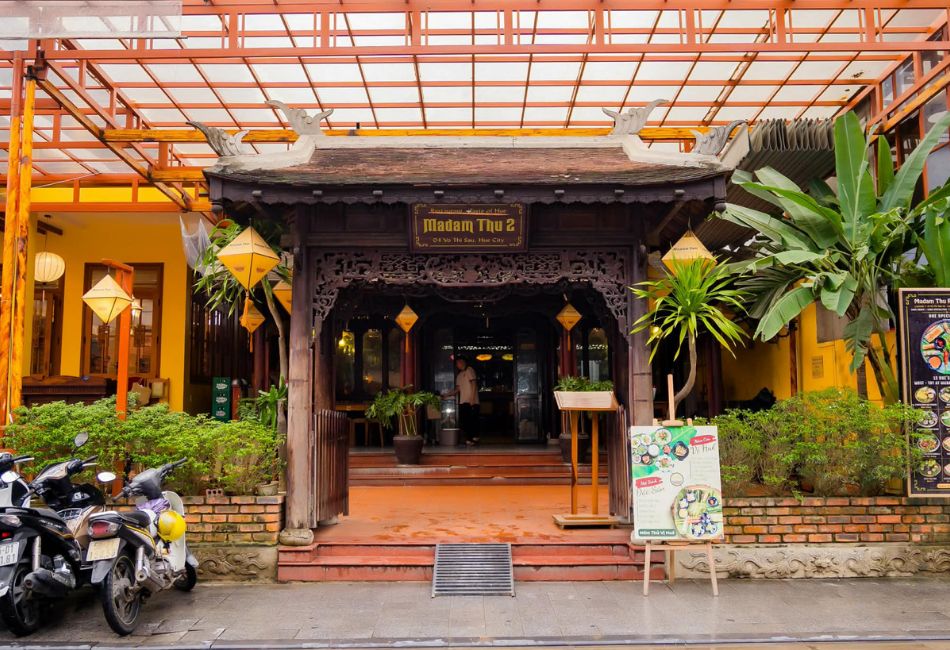
If you ask recent travelers where to eat in Hue for a memorable lunch or dinner, Madam Thu Restaurant consistently tops the list. With two convenient locations on the South Bank (Madam Thu 1 at 45 Vo Thi Sau Street and Madam Thu 2 at 04 Vo Thi Sau Street, Phu Hoi Ward), this beloved culinary space bridges the gap between authentic local street flavors and refined hospitality.
- What to Order: Their curated tasting menus allow solo travelers, couples, and families to sample all of Hue‘s greatest hits in one sitting, including steamed Banh Beo, Banh Nam, Banh Loc, Banh Ram It, crispy Banh Khoai, lemongrass Nem Lui, Bun Bo Hue, and caramelized clay-pot fish or braised pork.
- Cultural Atmosphere: Designed with warm wooden architecture, lantern-lit interiors, and traditional ceramic tableware, Madam Thu also hosts evening performances of traditional Hue folk music and hands-on market-to-table cooking classes.
4.2. Garden House Dining and Royal Banquet Restaurants
For a special anniversary, quiet garden lunch, or an immersion into aristocratic Hue Royal Cuisine, consider these atmospheric venues:
- Ancient Hue Garden Houses (104/47 Kim Long Street): Tucked inside the historic garden village of Kim Long along the route to Thien Mu Pagoda, this luxurious complex of restored royal timber houses serves artistic imperial tasting menus beside lotus ponds.
- Y Thao Garden (3 Thach Han Street): Set inside a peaceful walled garden house within the outer walls of the Imperial Citadel, Y Thao Garden offers affordable multi-course set lunches featuring classic royal-style dishes such as peacock-shaped appetizers and steamed lotus-seed rice.
- Les Jardins de la Carambole (32 Dang Tran Con Street): Housed in a restored early twentieth-century French colonial villa steps from the Imperial Citadel, this elegant restaurant serves both traditional Hue specialties and classic French-Vietnamese fusion dishes.
- Tinh Gia Vien (7 Kiet 28 Le Thanh Ton Street): Founded by culinary artisan Madame Ton Nu Thi Ha, a descendant of royal family lineages, this garden restaurant is famous for elaborate royal banquet courses carved into phoenixes and dragons (advance reservation recommended).
4.3. Best Vegetarian (Chay) Restaurants in Hue
As the heartland of Vietnamese Zen Buddhism, Hue boasts one of the most distinctive vegetarian (An Chay) food cultures in Vietnam. On the first and fifteenth days of the lunar month, many locals enjoy plant-based meals, and dedicated vegetarian restaurants operate year-round. If you’re wondering where to eat in Hue for authentic vegetarian cuisine, here are three local favorites worth visiting:
-
Quan Chay Thanh Lieu (50 Nguyen Cong Tru Street): A humble, beloved local eatery serving plant-based versions of Banh Beo, Banh Nam, Banh Loc, Bun Hue Chay, and crispy spring rolls at affordable prices (15,000–40,000 VND).
-
San May Vegetarian Restaurant (8 Thanh Tinh Street): Set inside a tranquil, lotus-filled wooden pavilion, San May offers creative Buddhist cuisine, including mushroom hotpots, fig salads (Va Tron), and lotus-wrapped rice.
-
Lien Hoa Vegetarian Restaurant (3 Le Quy Don Street): Located in a leafy courtyard in the city center, this restaurant serves over a hundred vegetarian dishes, attracting local Buddhist monks and international travelers.
For visitors exploring where to eat in Hue, these restaurants offer a wonderful introduction to the city’s rich vegetarian traditions and Buddhist culinary heritage.
5. Markets, Sweet Soups (Che Hue) & Iconic Salted Coffee
No guide on where to eat in Hue is complete without exploring its bustling market stalls, royal sweet soups, and the famous coffee invention that swept across all of Vietnam.
5.1. Dong Ba Market Food Court: A Daytime Grazing Paradise
Located on Tran Hung Dao Street along the northern bank of the Perfume River just outside the Imperial Citadel, Dong Ba Market is the oldest and largest commercial market in Hue. Head to the central food court wing between 8:00 AM and 4:00 PM to sample everything under one roof: Bun Thit Nuong (vermicelli with grilled pork), Banh Ep (sizzling pressed tapioca-egg pancakes), Banh Canh Nam Pho (thick shrimp-crab tapioca noodle soup), and fermented sour shrimp (Tom Chua).
5.2. Where to Try Che Hue (Sweet Soups) and Ca Phe Muoi (Salted Coffee)
To finish your meal or cool off during an afternoon sightseeing break, seek out these two sweet specialties:
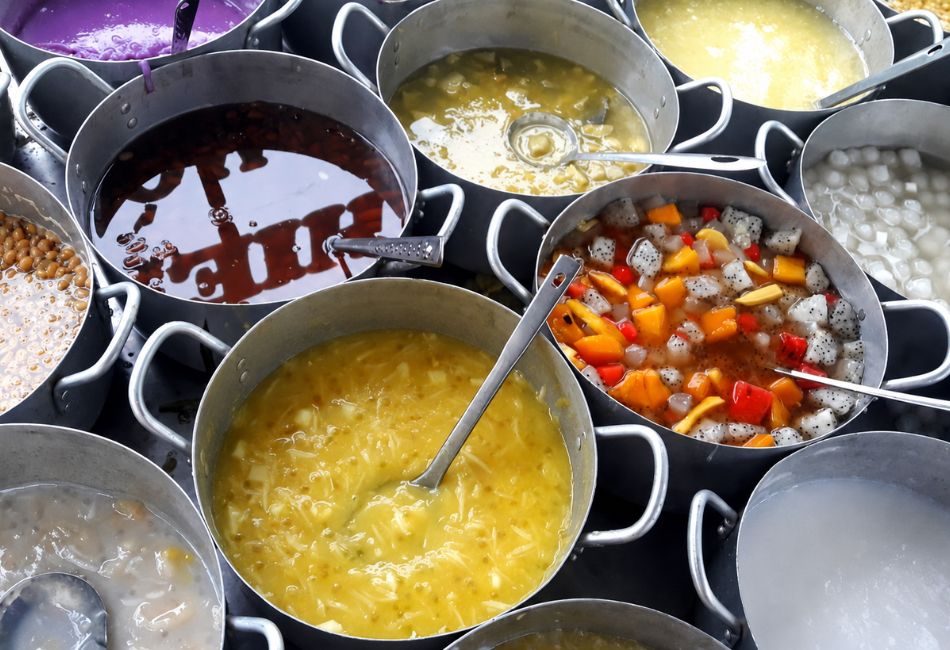
- Che Hue (Hue Sweet Soups): Hue has dozens of varieties of Che, from delicate Che Hat Sen Long Nhan (lotus seeds tucked inside sweet longan fruit, once served to emperors) and Che Khoai Tia (vivid purple yam pudding) to the famous savory-sweet Che Bot Loc Heo Quay (chewy tapioca pearls stuffed with crispy roasted pork belly in ginger syrup). Visit Che Hem at 1 Kiet 29 Hung Vuong Street or the open-air evening stalls at Che Mo Ton Dich in front of Thuong Bac Park on Tran Hung Dao Street.
- Ca Phe Muoi (Hue Salted Coffee): Invented right here in Hue, salted coffee pairs dark, slow-dripped Vietnamese Robusta coffee with sweet condensed milk and a cloud of lightly salted whipped cream that amplifies the caramel notes of the coffee. Visit the original creators at Ca Phe Muoi at 10 Nguyen Luong Bang Street or their spacious garden cafe at 142 Dang Thai Than Street right beside the Imperial Citadel walls.
6. Local Tips for Eating Like an Insider in Hue
To make the most of your culinary journey across Hue, keep these insider tips in mind:
- Follow the Local Meal Clock: Many specialized street vendors only serve during specific hours. Eat Bun Bo Hue and Com Hen for breakfast (6:00 AM to 10:00 AM), visit Dong Ba Market or sit-down heritage restaurants for lunch, enjoy Banh Beo Nam Loc as an afternoon snack (2:00 PM to 5:30 PM), and feast on Banh Khoai, Nem Lui, and Che Hue in the evening.
- Watch the Chili: Central Vietnamese cuisine is famously fiery. At street stalls, green bird’s-eye chilies and red chili satay paste are often placed on the table or added by default. Say “Khong cay” (not spicy) or “It cay” (a little spicy) when ordering if you prefer milder heat.
- Sample Mixed Platters: If you are short on time and exploring our recommended 15 Things to Do in Hue, Vietnam, ordering a combo tasting platter at a reputable restaurant like Madam Thu Restaurant or Hanh Restaurant lets you try 6 to 8 signature dishes in a single meal.
7. Taste the Best of Hue with Hue Local Experiences
While exploring on your own is wonderful, discovering hidden alleyways, understanding local menus, and uncovering the stories behind traditional royal recipes is even more rewarding with a local food lover. If you’re researching where to eat in Hue, Hue Local Experiences connects you with the authentic heart of our hometown, helping you discover local food beyond the usual tourist spots.
-
Guided Street Food & Cultural Tours: Join our passionate local storytellers on the Hue Experience All Tour or book a dedicated Hue Local Guide to discover hidden family-run food stalls rarely found in guidebooks.
-
Combine Sightseeing and Dining: Pair a morning visit to the Imperial Citadel, Thuy Xuan Incense Making Village, and the Mausoleum of Emperor Khai Dinh with an authentic garden house lunch using our private Hue Car Rental service.
-
Tailor-Made Itineraries: Have dietary preferences, vegetarian requests, or food allergies? Contact our local team to customize a private culinary adventure across Hue.
Whether you’re looking for where to eat in Hue or hoping to explore its culinary culture with a local guide, we’ll help you enjoy an authentic experience. Let us show you where to eat in Hue and discover the flavors and stories that make our hometown special.
8. Frequently Asked Questions (FAQs) About Where to Eat in Hue
What are the must-try dishes when visiting Hue for the first time?
First-time visitors should prioritize six iconic local specialties: Bun Bo Hue (lemongrass beef noodle soup), Com Hen (baby clam rice), steamed rice cakes (Banh Beo, Banh Nam, and Banh Bot Loc), crispy Banh Khoai pancakes, charcoal-grilled Nem Lui pork skewers, and Che Hue sweet soups accompanied by a glass of Ca Phe Muoi (salted coffee).
How much does food cost in Hue?
Hue is one of the most affordable culinary destinations in Vietnam. Street food dishes such as Com Hen, Che Hue, or a plate of Banh Beo cost between 15,000 and 35,000 VND (under $1.50 USD). A generous bowl of Bun Bo Hue ranges from 35,000 to 60,000 VND, while a full multi-dish feast at a comfortable sit-down restaurant like Madam Thu Restaurant typically costs 150,000 to 300,000 VND ($6 to $12 USD) per person.
Is street food in Hue safe for international travelers to eat?
Yes, street food in Hue is generally very safe when you follow basic local habits: choose busy stalls with high turnover where dishes are steamed or boiled fresh in front of you, visit morning noodle shops during peak breakfast hours, or dine at well-established local restaurants on Vo Thi Sau Street, Pham Hong Thai Street, and Pho Duc Chinh Street.
Is Hue a good destination for vegetarian and vegan travelers?
Absolutely. Because Hue is the historic center of Vietnamese Buddhism, vegetarian dining (Com Chay) is deeply woven into everyday life. Dedicated restaurants such as Quan Chay Thanh Lieu, San May, and Lien Hoa serve plant-based versions of almost every traditional Hue specialty without fish sauce or meat broth.
Recent Posts
Tu Duc Tomb in Hue: Complete Visitor Guide, History & Architecture


How to Get Thien Mu Pagoda: Complete Hue Travel Guide